Medical Representative Job (MR Job) Preparation: What You Learn in a Training Course?
Starting a career in the pharmaceutical industry can feel confusing when you are new to the field. You may have completed your graduation, started looking for vacancies and come across several Medical Representative Job opportunities, but still wonder what companies expect from fresh candidates. Knowing about medicines alone is not enough. A medical representative also needs communication skills, product knowledge, confidence and the ability to build professional relationships.
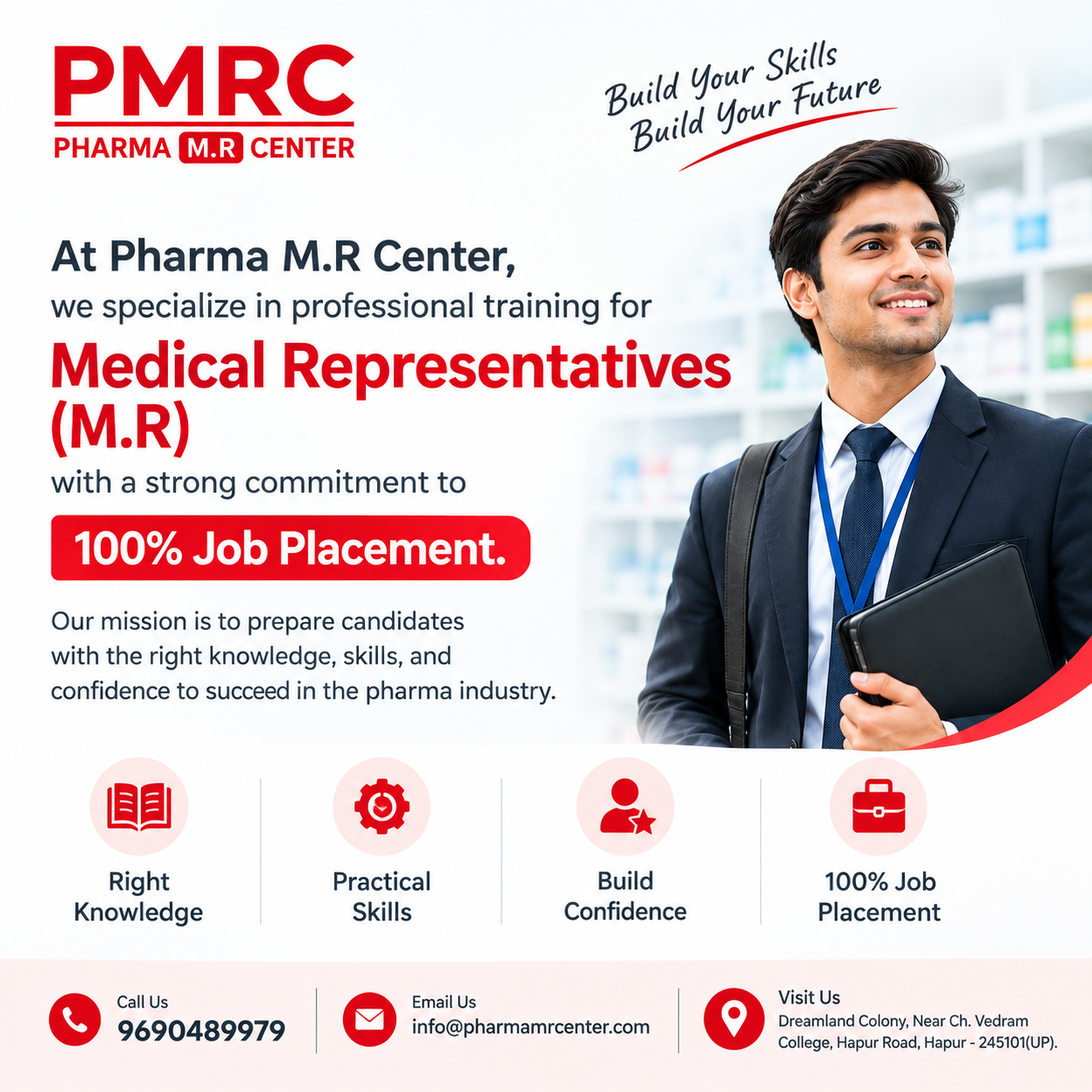 This is where a medical representative training course can make a difference. It introduces candidates to the practical side of pharmaceutical sales and helps them understand the responsibilities they may handle after joining a company.
For candidates exploring a Medical Representative Job, professional preparation can provide a clearer idea of the work involved. At a Medical Representative Job MR Center, the learning process can focus on developing the knowledge and practical skills needed to prepare for entry-level opportunities in the pharma industry.
1. Understanding the Role of a Medical Representative
The first thing candidates learn in a training course is what a medical representative actually does. An MR works as a link between a pharmaceutical company and healthcare professionals. The role generally involves communicating information about the company's products to doctors, chemists and other relevant healthcare professionals.
A medical representative may be responsible for:
2. Pharmaceutical Product Knowledge
Product knowledge is one of the most important subjects covered in a medical representative training course. A candidate should understand the products they may need to discuss during professional visits.
Training generally introduces learners to topics such as:
The purpose of product training is not to make unsupported medical claims. Candidates should learn to explain information accurately, stay within approved promotional material and refer clinical questions to qualified healthcare professionals.
3. Communication Skills for Professional Visits
A medical representative spends a significant part of the working day communicating with people. This is why communication training is an important part of MR preparation.
A candidate may have good academic knowledge but still struggle to explain information clearly. Training helps improve the way learners introduce themselves, organise their thoughts and communicate professionally.
You may learn how to:
A successful representative does not simply speak more. They understand when to explain, when to listen and how to communicate without wasting another person's time.
4. Learning How to Conduct Doctor Visits
Doctor visits are an important part of many Medical Representative Job profiles. However, freshers may not know how these meetings are organised or what is expected during a professional visit.
A training programme can introduce candidates to the basic structure of a doctor call.
This may include:
Preparation before the visit: Reviewing the product information, planning the day's route and understanding the purpose of the meeting.
Professional introduction: Greeting the doctor respectfully and introducing yourself in an appropriate manner.
Product presentation: Sharing relevant and approved product information in a clear, organised way.
Handling questions: Listening carefully and responding only with accurate information within your knowledge and authority.
Closing the visit: Ending the conversation politely and maintaining a professional relationship.
Role-play exercises can help candidates practise these situations before entering the field.
5. Developing Presentation Skills
Product presentation is another important area of MR preparation. A medical representative should be able to explain product information in a structured way rather than simply reading from a brochure.
During training, candidates may practise presenting product details, explaining key information and maintaining a clear flow during conversations.
A good presentation generally includes:
6. Understanding the Pharmaceutical Sales Process
A Medical Representative Job is not limited to product presentations. It also involves understanding sales activities and working towards company targets.
A training course may introduce candidates to the basic sales process, including territory management, customer interactions, follow-ups and reporting.
Some important topics include:
It is also important to understand that sales targets and working methods can differ from one company to another.
7. Building Confidence and Personality Development
Confidence plays an important role in a field-based career. Medical representatives meet different people throughout the day, so they need to communicate comfortably in professional situations.
A medical representative training course may include personality development sessions to help candidates improve their overall presentation.
These sessions can focus on:
The aim is not to change someone's personality but to help them present themselves professionally and communicate more effectively.
8. Learning Time Management and Field Work Planning
Fieldwork requires proper planning. A medical representative may have several doctors, chemists or other assigned contacts to visit during a working day.
Without a clear schedule, it can become difficult to manage time and complete planned activities.
Training may introduce candidates to basic field planning, such as:
9. Preparing for MR Job Interviews
Getting selected for a job is another important part of career preparation. Pharmaceutical companies may ask fresh candidates questions about their education, communication skills, product knowledge and understanding of the MR role.
Training programmes may include mock interviews and question-answer sessions to help candidates prepare.
Some common interview questions include:
10. Practical Training and Role-Play Activities
Reading about the responsibilities of an MR is useful, but practical exercises help candidates understand how those responsibilities work in real situations.
A good training programme may include activities such as mock doctor visits, product presentations, group discussions and communication exercises.
For example, a trainer may ask a candidate to introduce a pharmaceutical product in a simulated meeting. Another activity may involve responding to a professional question or planning a daily visit schedule.
These exercises help learners identify areas where they need improvement.
When comparing a Medical Representative Job MR Center, candidates should ask whether the programme includes practical sessions alongside classroom learning. Practical exposure can help make the learning experience more relevant to the actual job.
11. What Should You Look for in a Medical Representative Training Course?
Not every training programme covers the same subjects. Before enrolling, check the course structure and understand what you will learn.
Here are some useful points to consider:
Also ask about the trainers' experience, course duration, batch size, learning materials and placement assistance. If a centre offers placement support, understand what that support includes. Training and placement assistance can help with preparation, but employment depends on individual performance and the hiring company's requirements.
12. How Pharma M.R Center Can Help Fresh Candidates Prepare
Candidates looking for a starting point in the pharmaceutical industry can explore training options at Medical Representative Job MR Center. Pharma M.R Center focuses on helping aspiring professionals understand the MR role and prepare for entry-level opportunities.
The centre's training approach can help candidates work on important areas such as pharmaceutical product knowledge, communication, personality development and interview preparation.
For someone without previous field experience, structured learning can make the career path easier to understand. Instead of applying for vacancies without knowing what the job involves, candidates can first work on the basic skills expected in the role.
Before joining, candidates should review the course details, understand the practical training provided and discuss any placement support available.
Conclusion
Preparing for a Medical Representative Job involves more than learning the names of medicines or understanding pharmaceutical products. Candidates also need communication skills, presentation ability, professional behaviour, fieldwork planning and interview preparation.
A well-structured medical representative training course introduces freshers to these areas and gives them an opportunity to practise important workplace situations. When exploring a Medical Representative Job MR Center, look for a programme that combines theoretical learning with practical exercises.
Starting a career in pharma sales takes patience, preparation and consistent effort. With the right training and a willingness to learn, fresh candidates can build a stronger foundation for pursuing opportunities in the pharmaceutical industry.
Medical Representative Job MR Center
This is where a medical representative training course can make a difference. It introduces candidates to the practical side of pharmaceutical sales and helps them understand the responsibilities they may handle after joining a company.For candidates exploring a Medical Representative Job, professional preparation can provide a clearer idea of the work involved. At a Medical Representative Job MR Center, the learning process can focus on developing the knowledge and practical skills needed to prepare for entry-level opportunities in the pharma industry.
1. Understanding the Role of a Medical Representative
The first thing candidates learn in a training course is what a medical representative actually does. An MR works as a link between a pharmaceutical company and healthcare professionals. The role generally involves communicating information about the company's products to doctors, chemists and other relevant healthcare professionals.
A medical representative may be responsible for:
- Visiting doctors according to an assigned schedule.
- Sharing approved information about pharmaceutical products.
- Explaining product features and relevant details.
- Maintaining professional relationships with healthcare professionals.
- Coordinating with chemists and distributors where required.
- Meeting assigned sales and reporting targets.
- Submitting daily work reports to the company.
2. Pharmaceutical Product Knowledge
Product knowledge is one of the most important subjects covered in a medical representative training course. A candidate should understand the products they may need to discuss during professional visits.
Training generally introduces learners to topics such as:
- Basic information about pharmaceutical products.
- Common dosage forms, including tablets, capsules, syrups and injections.
- Product composition and approved indications.
- Basic information about therapeutic categories.
- Differences between brands and generic medicines.
- Reading and understanding product literature.
The purpose of product training is not to make unsupported medical claims. Candidates should learn to explain information accurately, stay within approved promotional material and refer clinical questions to qualified healthcare professionals.
3. Communication Skills for Professional Visits
A medical representative spends a significant part of the working day communicating with people. This is why communication training is an important part of MR preparation.
A candidate may have good academic knowledge but still struggle to explain information clearly. Training helps improve the way learners introduce themselves, organise their thoughts and communicate professionally.
You may learn how to:
- Start a conversation politely.
- Introduce yourself and your company.
- Explain product information in simple language.
- Listen carefully to questions.
- Respond professionally.
- Keep conversations focused and respectful.
A successful representative does not simply speak more. They understand when to explain, when to listen and how to communicate without wasting another person's time.
4. Learning How to Conduct Doctor Visits
Doctor visits are an important part of many Medical Representative Job profiles. However, freshers may not know how these meetings are organised or what is expected during a professional visit.
A training programme can introduce candidates to the basic structure of a doctor call.
This may include:
Preparation before the visit: Reviewing the product information, planning the day's route and understanding the purpose of the meeting.
Professional introduction: Greeting the doctor respectfully and introducing yourself in an appropriate manner.
Product presentation: Sharing relevant and approved product information in a clear, organised way.
Handling questions: Listening carefully and responding only with accurate information within your knowledge and authority.
Closing the visit: Ending the conversation politely and maintaining a professional relationship.
Role-play exercises can help candidates practise these situations before entering the field.
5. Developing Presentation Skills
Product presentation is another important area of MR preparation. A medical representative should be able to explain product information in a structured way rather than simply reading from a brochure.
During training, candidates may practise presenting product details, explaining key information and maintaining a clear flow during conversations.
A good presentation generally includes:
- A polite opening.
- A clear introduction to the product.
- Relevant approved product information.
- Important points presented in an organised manner.
- A professional closing.
6. Understanding the Pharmaceutical Sales Process
A Medical Representative Job is not limited to product presentations. It also involves understanding sales activities and working towards company targets.
A training course may introduce candidates to the basic sales process, including territory management, customer interactions, follow-ups and reporting.
Some important topics include:
- Understanding an assigned sales territory.
- Planning daily visits.
- Maintaining a regular visit schedule.
- Understanding sales targets.
- Tracking business performance.
- Coordinating with the sales team.
- Preparing daily and monthly reports.
It is also important to understand that sales targets and working methods can differ from one company to another.
7. Building Confidence and Personality Development
Confidence plays an important role in a field-based career. Medical representatives meet different people throughout the day, so they need to communicate comfortably in professional situations.
A medical representative training course may include personality development sessions to help candidates improve their overall presentation.
These sessions can focus on:
- Self-introduction.
- Professional appearance and grooming.
- Positive body language.
- Speaking with confidence.
- Time management.
- Listening skills.
- Workplace behaviour.
The aim is not to change someone's personality but to help them present themselves professionally and communicate more effectively.
8. Learning Time Management and Field Work Planning
Fieldwork requires proper planning. A medical representative may have several doctors, chemists or other assigned contacts to visit during a working day.
Without a clear schedule, it can become difficult to manage time and complete planned activities.
Training may introduce candidates to basic field planning, such as:
- Preparing a daily visit plan.
- Organising visits according to location.
- Managing travel time between appointments.
- Keeping records of completed visits.
- Planning follow-ups.
- Preparing reports at the end of the day.
9. Preparing for MR Job Interviews
Getting selected for a job is another important part of career preparation. Pharmaceutical companies may ask fresh candidates questions about their education, communication skills, product knowledge and understanding of the MR role.
Training programmes may include mock interviews and question-answer sessions to help candidates prepare.
Some common interview questions include:
- What is the role of a medical representative?
- Why do you want to work in the pharmaceutical industry?
- What do you understand about pharmaceutical sales?
- How would you introduce a product to a doctor?
- How would you handle a difficult professional conversation?
- Are you comfortable with fieldwork and travelling?
- Why should a company hire you as a fresher?
10. Practical Training and Role-Play Activities
Reading about the responsibilities of an MR is useful, but practical exercises help candidates understand how those responsibilities work in real situations.
A good training programme may include activities such as mock doctor visits, product presentations, group discussions and communication exercises.
For example, a trainer may ask a candidate to introduce a pharmaceutical product in a simulated meeting. Another activity may involve responding to a professional question or planning a daily visit schedule.
These exercises help learners identify areas where they need improvement.
When comparing a Medical Representative Job MR Center, candidates should ask whether the programme includes practical sessions alongside classroom learning. Practical exposure can help make the learning experience more relevant to the actual job.
11. What Should You Look for in a Medical Representative Training Course?
Not every training programme covers the same subjects. Before enrolling, check the course structure and understand what you will learn.
Here are some useful points to consider:
| Training Area | Why It Matters |
|---|---|
| Pharma product knowledge | Helps candidates understand product information |
| Communication skills | Prepares candidates for professional interactions |
| Doctor call practice | Introduces the structure of field visits |
| Sales fundamentals | Explains targets, territory planning and reporting |
| Personality development | Builds professional confidence |
| Interview preparation | Helps candidates prepare for recruitment |
| Practical activities | Allows learners to practise workplace situations |
12. How Pharma M.R Center Can Help Fresh Candidates Prepare
Candidates looking for a starting point in the pharmaceutical industry can explore training options at Medical Representative Job MR Center. Pharma M.R Center focuses on helping aspiring professionals understand the MR role and prepare for entry-level opportunities.
The centre's training approach can help candidates work on important areas such as pharmaceutical product knowledge, communication, personality development and interview preparation.
For someone without previous field experience, structured learning can make the career path easier to understand. Instead of applying for vacancies without knowing what the job involves, candidates can first work on the basic skills expected in the role.
Before joining, candidates should review the course details, understand the practical training provided and discuss any placement support available.
Conclusion
Preparing for a Medical Representative Job involves more than learning the names of medicines or understanding pharmaceutical products. Candidates also need communication skills, presentation ability, professional behaviour, fieldwork planning and interview preparation.
A well-structured medical representative training course introduces freshers to these areas and gives them an opportunity to practise important workplace situations. When exploring a Medical Representative Job MR Center, look for a programme that combines theoretical learning with practical exercises.
Starting a career in pharma sales takes patience, preparation and consistent effort. With the right training and a willingness to learn, fresh candidates can build a stronger foundation for pursuing opportunities in the pharmaceutical industry.
Medical Representative Job MR Center