Patek Philippe’s AI Red Collection: Administrative Tasks for Machines, Imagination for Humans
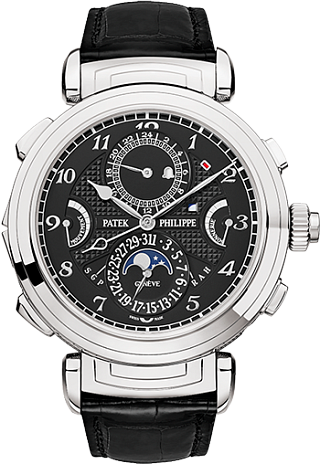
Patek Philippe’s AI Red Collection: Administrative Tasks for Machines, Imagination for Humans
Patek Philippe President upon AI: Why the Brand Allows Machines Handle Paperwork however Keeps Them Away from Style
Thierry Demanding has drawn a clear collection: AI can handle paperwork, yet imagination must remain strongly in human hands. This short article examines Patek Philippe’s method of AI alongside industry information to explore the brand’s distinction among " instrumental AI" as well as " creative AI. "
A Regularly Cited-and Often Misinterpreted-Statement
One of the most widely circulated feedback on AI from Patek Philippe President Thierry Strict comes from an interview with *The Straits Times* during the 2026 " Watch Art Great Exhibition" in Milan. This individual noted that while he is available to using AI for management tasks, handing over the secrets to imagination is an completely different matter-adding, " I am not about to hand over half my shares to a pc. "
replica luxury watches
Initially, this might sound like a protective stance taken by a conventional, family-run watchmaker against new-technology. However , when viewed inside the context of how Patek Philippe actually employs AI, the positioning is far more nuanced than simply " resistance. " AI is permitted to assist along with operational processes, but it is actually barred from the creation associated with meaning. On the same occasion, Stringent acknowledged that the brand offers experimented with AI, noting which " you could ask AI to design a watch-it’s effective at anything. " The issue is not just one of capability, but regarding authorship: " It is not my soul; it certainly is not my DNA. Even if the outcome is beautiful, I could not look you in the eyes and say, 'This will be our creation. '"
This AI technique is defined by the limitations of authorship. The leading criterion is not " may AI do it? " but instead, " once it’s carried out, can the brand still truthfully claim it as its own function? "
How Patek Philippe Actually Utilizes AI
In the circumstance of Patek Philippe’s procedures, the term " paperwork" -as used by Stern-is not a dismissive oversimplification. For a watchmaker together with limited annual production, a very complex product portfolio, years-long client waiting lists, and a dedication to remaining an independent, family-owned business, the volume of perform involved in planning, scheduling, provide chain coordination, and high quality documentation is immense. With this level, the value of AI is not situated in replacing watchmakers, however in liberating scarce human interest from administrative complexity, letting it be redirected toward view and craftsmanship.
Industry data supports the explanation behind this division of work. The Swiss watchmaking field has already adopted AI-powered visible inspection to a significant level. Automated defect detection with regard to dials, cases, straps, and also movement components now accomplishes an accuracy rate going above 99. 7%-surpassing the overall performance of most human inspectors within routine quality checks. A few component manufacturers have documented a 40% to 60% reduction in quality deviation prices. These applications share a typical characteristic: their objective functionality is " consistency" instead of " novelty. " AI is trained to identify " what is wrong, " not to figure out " what constitutes visual rightness. "
Patek Philippe is not adverse to technology at this degree. Thierry Stern has clearly stated that the brand provides " never rejected technology"; what he opposes is usually placing algorithms at the source of design decisions. AI can serve as an amplifier-stabilizing top quality control, making processes much more predictable, and allowing artists to focus their time in tasks that cannot be automated-but it cannot serve as the foundation, the primary cause behind the reason why a watch looks the way it can.
Why the actual distinction between " a key component AI" and " innovative AI" is particularly critical for Patek Philippe
For Patek Philippe, this boundary much more fundamental than it is regarding upstart brands or all those owned by large conglomerates. The brand’s entire worth architecture is built upon continuity: the Stern family took the particular helm in 1932, and also the company is now in its 4th generation of their stewardship. The enduring advertising slogan-" You never really own a Patek Philippe" -redefines ownership as a form of intergenerational custodianship. At the brand’s event in Milan, historical records are displayed alongside modern pieces, and live demos of craftsmanship serve as an integral part of typically the narrative. Within this value platform, the " author" is not really merely a marketing label, nevertheless a position within a chain involving responsibility that spans decades. If the primary agency connected with design is handed over for an algorithm, a break occurs in often the chain of continuous narrative-a gap that cannot be mended simply by labeling it " AI-assisted. " What is passed on from one generation to the next is not an object shaped by human being judgment-an object whose artistic intent can be traced returning to a specific human mind-but instead the output of an optimization procedure. When Stern remarks, " I am not prepared to give half the shares to some computer, " he is directing precisely to this rupture: stocks imply ownership, and possession entails the capacity to take obligation for the question, " The reason why was it done by doing this? " Algorithms can produce solutions, but they cannot presume such responsibility.
Reframing the topic on AI in Watchmaking
Comparing the methods of Audemars Piguet, Breitling, and Patek Philippe provides a more useful framework compared to simplistic " embrace or even resist" dichotomy. Audemars Piguet leverages AI to lower the actual operational threshold for complicated functions; Breitling uses this to optimize commercial stock and merchandising decisions; along with Patek Philippe establishes crystal clear, inviolable boundaries for AI within the creative process. While their specific applications vary, they share a common fundamental logic: the value of AI will not lie in " creating watches like a human, " but in liberating humans through tasks that do not need human intervention-thereby allowing human judgment to be focused wherever it is truly essential.
For content approach and brand communication, the particular long-term value of this construction lies in its refusal to consider a binary side. Users searching for " will AI replace watchmakers" are rarely searching for a simple " yes" or perhaps " no"; rather, these people seek nuance-a way to differentiate between processes that can be automatic without compromising brand benefit, and those where automation might strip away the very essence of this value. Patek Philippe’s position provides a practical litmus examination: if a brand cannot state an AI-generated output becasue it is own-by saying, " This really is our work" -then that will output has no place in typically the creative process.
high quality replica watches
replica Patek Philippe grand complications watches
luxury replica watches
swiss replica watches
replica patek philippe watches
replica swiss watches
high quality watches replica
https://www.prowatchduo.co.uk